
Hot Vulcanised vs Cold Bonded Pulley Lagging: How to Choose the Right Method
Pulley lagging plays a critical role in how a conveyor system performs. By increasing traction, reducing belt slippage, improving water shedding, and protecting the pulley shell from wear and corrosion, it directly influences an operation’s reliability, efficiency, and maintenance costs.
Anyone working with conveyors in bulk material handling industries understands its importance. What continues to spark debate, however, is not whether pulley lagging is needed, but how it should be applied.
After more than 29 years working in the mining industry, I’ve seen the full spectrum of pulley lagging successes, failures, and strong opinions. The two most widely used methods, cold bonding and hot vulcanisation, each have their place, advantages, and limitations.
Rather than taking sides, this blog breaks down both approaches to help you understand how they compare and which method is best suited to your conveyor application.
What is Cold Bonded Pulley Lagging?
Cold bonded pulley lagging is a method where rubber or ceramic lagging is adhered directly to the pulley shell using industrial adhesives. Installation can be completed onsite or in a workshop and does not require specialised vulcanising equipment. In most cases, cold-bonded pulley lagging can be installed within a few hours, helping reduce conveyor downtime.
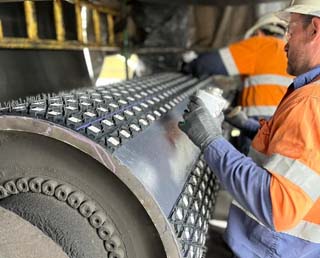 |
| Cold-bonded pulley lagging being installed onsite, providing a fast solution with minimal downtime. |
Advantages of Cold Bonding
- Lower upfront cost compared to hot vulcanised pulley lagging
- No requirement for specialised heating or vulcanising equipment
- Suitable for onsite pulley lagging installation
- Minimises service interruption and downtime
Disadvantages of Cold Bonding
- Performance is affected by ambient temperature and humidity
- Installation quality is highly dependent on surface preparation and installer experience
- Risk of adhesive bond failure if preparation standards are not met
- Typically better suited to medium-term conveyor applications rather than full pulley service life
Cold bonding is commonly used during maintenance shutdowns or applications where removing the pulley from the conveyor system is more complex. When installed in controlled conditions with proper surface preparation, cold-bonded pulley lagging can deliver long service life in certain operating environments. 
For example, a Full Ceramic Flex-Lag® ceramic dimpled cold-bonded pulley lagging was installed on a head pulley in an iron ore operation in the Pilbara in 2001 and remains in perfect condition today after 25 years of continuous service. Operating at belt speeds of 5 m/s, the lagging has delivered consistent traction and protected the pulley shell.
What is Hot Vulcanised Pulley Lagging?
Hot vulcanised pulley lagging is a process where rubber or ceramic lagging is cured onto the pulley shell using heat and pressure. The lagging is typically vulcanised at temperatures between 140–160 °C for three to six hours, creating a strong, uniform bond between the lagging and the pulley shell.
Because the process requires specialised vulcanising equipment, such as an autoclave, hot vulcanised pulley lagging can only be completed in a factory environment. This means the pulley must be removed from site and transported off-site for processing.
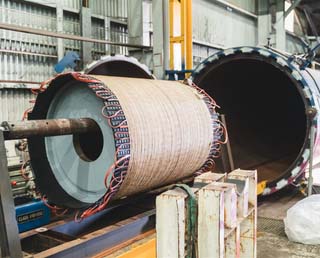 |
| Pulley lagging being hot vulcanised in an autoclave to create a long-lasting bond. |
Advantages of Hot Vulcanising
- Creates a permanent bond between the lagging and the pulley shell
- Excellent resistance to heat, moisture, oils, and harsh operating conditions
- Seals the pulley shell, helping prevent dust and moisture ingress
- Best suited for ceramic pulley lagging applications
- Designed to deliver long service life in demanding environments
Disadvantages of Hot Vulcanising
- Requires specialised vulcanising equipment and controlled factory conditions
- Cannot be performed onsite
- Higher overall cost due to pulley removal, labour transport, and processing
- Longer lead times compared to cold-bonded pulley lagging
Hot vulcanised pulley lagging is typically selected for applications where long-term reliability is critical and unplanned conveyor downtime must be minimised. It is commonly used on critical pulleys in high-duty conveyor systems where consistent performance over the full service life is a priority.
How to Choose Between Cold Bonded and Hot Vulcanised Pulley Lagging
Choosing between cold bonded and hot vulcanised pulley lagging is not about which method is “better” overall, but which is best suited to your specific conveyor application. The right choice depends on a combination of operational, environmental, and maintenance factors.
Operating Environment
Temperature extremes, moisture, dust levels, and exposure to oils or chemicals can all influence lagging performance. In controlled or moderate environments, cold bonded pulley lagging can perform reliably when installed correctly. In harsher conditions, hot vulcanised lagging may offer greater long-term stability.
Downtime and Accessibility
If removing the pulley is impractical or extended downtime is not an option, cold bonding allows for onsite installation and faster turnaround. Hot vulcanised pulley lagging, while requiring pulley removal and off-site processing, is often chosen for planned shutdowns where long-term reliability is prioritised.
Service Life Expectations
Cold bonded lagging is commonly selected for medium-term applications or maintenance-driven installations. Hot vulcanised lagging is typically specified for critical pulleys where maximum service life and consistent performance over time are required.
Installation Quality & Control
Cold bonding is highly dependent on surface preparation, ambient conditions, and installer experience. Hot vulcanisation benefits from controlled factory conditions, which reduces variability in bond quality.
What Happens If the Wrong Pulley Lagging Method Is Chosen?
Selecting an installation method that does not align with the operating conditions can create avoidable reliability and maintenance issues, including:
- Lagging delamination or premature peeling
- Moisture ingress at lagging edges, leading to pulley shell corrosion
- Reduced traction or inconsistent grip, increasing the risk of belt slippage
- Accelerated pulley wear, potentially resulting in full pulley replacement and extended downtime
Matching the pulley lagging installation method to the application is critical for long-term conveyor performance and asset protection. Each method offers distinct advantages depending on environmental conditions, downtime constraints, and service life expectations.
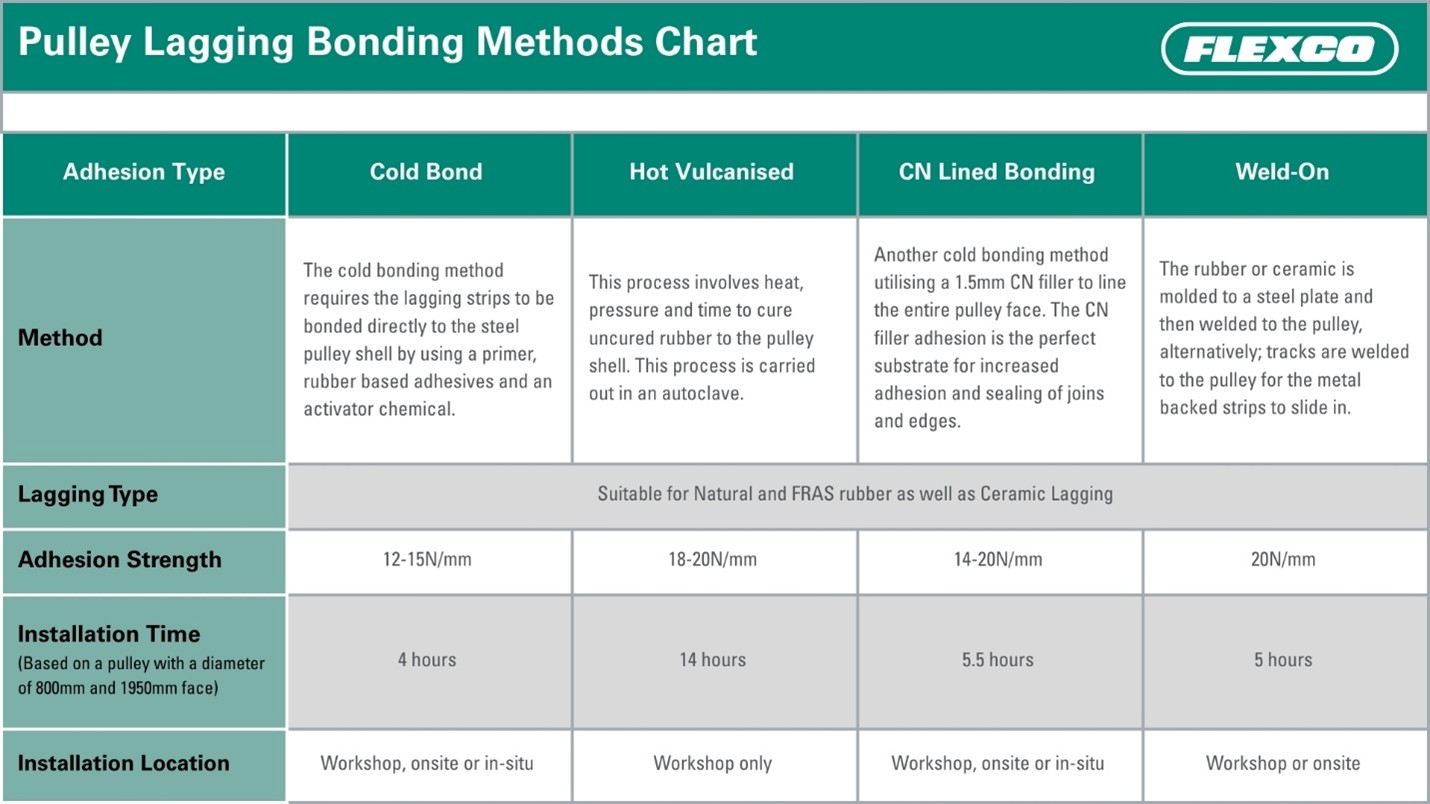
You can use our comparison table below to help you determine which method is best suited for your application and individual requirements.
Talk with Flexco Expert
Choosing the right bonding method, either hot vulcanised or cold bonded pulley lagging, is not about which method is better. It’s about selecting the right solution for your specific operating conditions.
For additional support, Flexco offers a free digital pulley lagging assessment designed to evaluate current lagging performance and installation quality. As part of the assessment, a Flexco expert will:
- Assign a star rating to your existing pulley lagging performance
- Identify opportunities to improve lagging installation and bonding methods
- Assess whether the selected pulley lagging is appropriate for the application, or if an alternative solution may improve conveyor reliability
This assessment helps operations reduce belt slippage, extend pulley service life, and make informed, application-specific decisions that support long-term conveyor performance.
Register here to book your assessment.
Authored by: Phil Dreghorn, Queensland Regional Manager
Author bio: Dreghorn joined Flexco in 2003 as Queensland’s Sales Manager. Prior to Flexco, Dreghorn held various roles in the belt conveyor system industry involving conveyor maintenance and belt splicing and has a special interest in lagging products. Dreghorn holds qualifications as a boilermaker and belt splicer and completed training as a Work Health and Safety Officer.
Related Blogs
Published Date
May 14, 2026Product Group
- Bondable and Weld-On Pulley Lagging
Issues
- Belt Preparation
- Belt Protection
- Belt Wear
- Downtime
- Maintenance
- Slippage